Give restaurants, importers and wine shops their own reserved portal: they log in, see the price list you set for them and order — while you cap limited vintages per customer and confirm each order from one place.
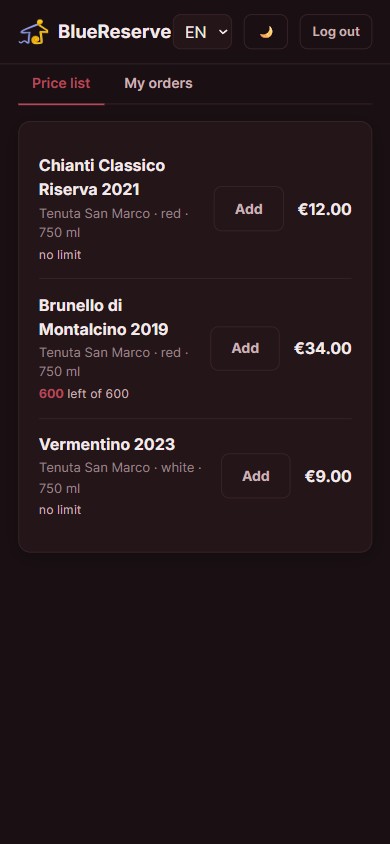
Set each customer's prices and allocations once; they order at will, and everything comes back to your panel to confirm.
From your panel you decide the price list each trade customer sees and how many bottles of a limited wine they can take. Orders arrive ready to confirm.
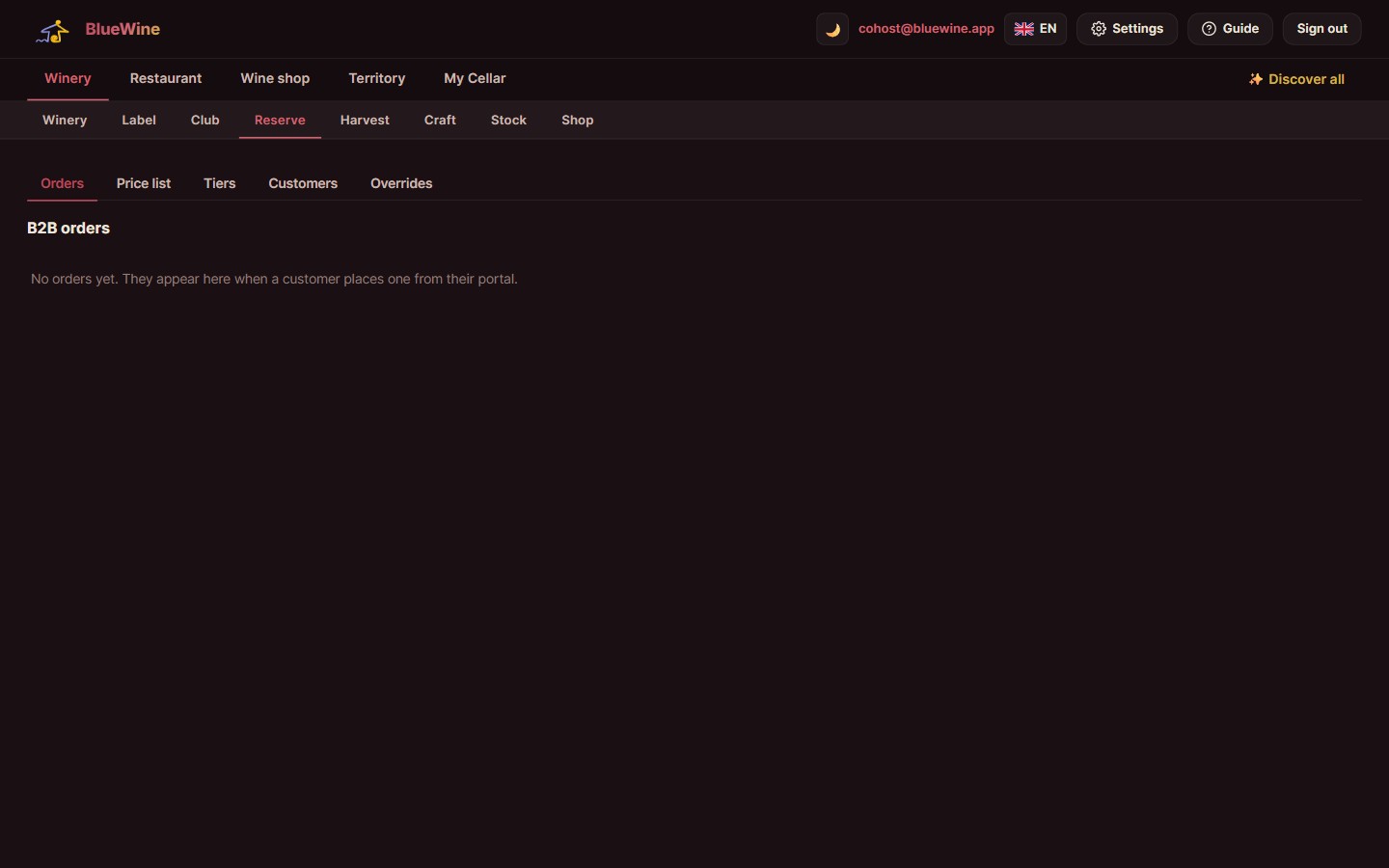
Each trade customer logs in with their own account and sees only their prices and available allocations — then orders in a few clicks, no phone calls.
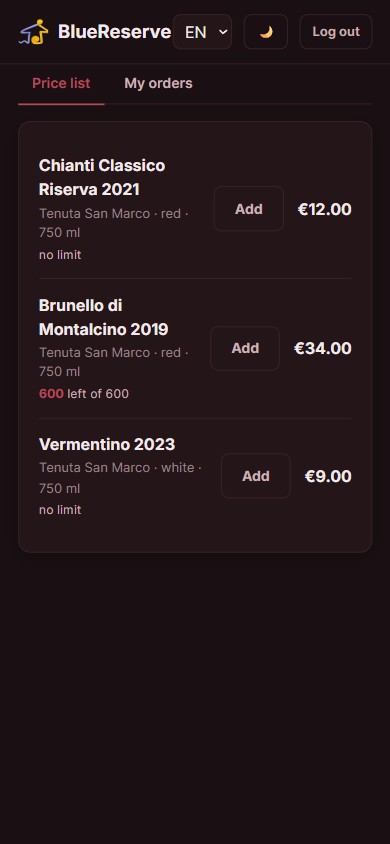
Create an account and price list for each trade buyer.
Cap the limited wines so no single customer takes them all.
Orders land in your panel — confirm and fulfil.
Wineries selling to trade buyers — importers, restaurants, shops — with agreed prices and limited quantities, rather than to the public.
In three layers. Every wine has a base price; a tier — Restaurants, Importers, VIP, whatever you name them — overrides it for a group of customers; and an override on a single customer beats both. You only fill in what differs, and everything else falls back.
The cap on how many bottles a customer may take of a wine. The panel shows the cap, what is already committed and what remains, and the portal will not let a buyer order past it.
Either you create an invite code and send it to them, or they sign up themselves and wait for your approval. Customers are invited, pending, active or suspended, and you control which.
Yes, from their own portal, seeing their own price list. Orders arrive already inside their allocation instead of by email at eleven at night.
It moves from submitted to confirmed, ready, and fulfilled, or it is cancelled. Cancelling puts the bottles back into the customer's allocation rather than losing them.
If you link a wine to a BlueStock reference, fulfilling an order unloads those bottles from the warehouse. The link is optional and it tells you before it does it.
No. It handles allocations, price lists and orders. Invoicing stays where it is — though you can record a customer's VAT number, which matters for export buyers.
Because it is not a page, it is a portal: every buyer has their own login, their own price list and their own allocations, and it is the largest module in the ecosystem. Pricing it like a small tool would be misleading.
Yes, and that is the sensible way in — two real customers before rolling it out to thirty.
You export them, allocations and order history included.
Yes, and it is a fair part of what we do. If one of these is close but not quite what your work needs, we can shape it around you — a field you actually use, a step your day really has — or build something that does not exist yet. Write to us and say what is missing; if we think you are better off with something that already exists, we will tell you that too, even though it means not selling you anything.
Your guests already can. You add the languages you sell in and write the wine names, descriptions and e-label text in each, so a visitor reads the page in their own language. The admin panel you work in is English, Italian, Romanian or Greek; if you need the panel in another language, ask and we will do it for you.
Tell us about your trade customers and we'll set up BlueReserve for you.
Get started